The early signs of hair thinning are often subtle. You may notice a wider part, more scalp showing under bright light, a smaller ponytail, increased shedding, or a hairline that looks slightly less dense than it did a few months ago. In men, the first change may appear around the temples or crown. In women, thinning often becomes more noticeable along the central part.
Recognising these changes early matters because genetics, hormones, stress, nutrition, illness, medication, scalp conditions, and ageing can all affect density. The first step is deciding whether you are seeing true thinning, temporary shedding, or breakage.
Table of Contents
What Does Early Hair Thinning Look Like?
Hair thinning usually develops gradually. Rather than a sudden bald area, many people first notice that their usual hairstyle no longer looks as full. The scalp may be easier to see when the hair is wet, parted, or photographed from above. Bright bathroom lighting and direct sunlight can make the change more obvious.
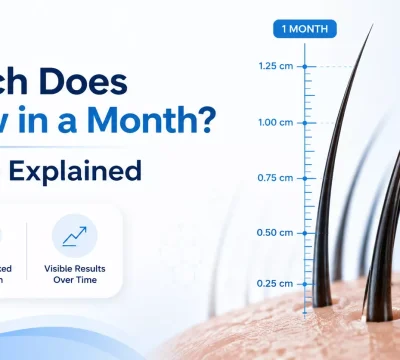
Comparing photographs taken several weeks apart under similar conditions is more useful than daily mirror checks. Hair changes slowly. Asli Tarcan Global’s guide on how much hair grows in a month explains why short-term differences can be misleading.
What Are the First Signs You Should Watch For?
Several small changes can appear before obvious hair loss develops:
- Your part looks wider than it used to.
- More scalp is visible in photos or bright light.
- The temples look deeper or less dense.
- The crown shows more scalp from above.
- A ponytail or bun feels smaller.
- You notice more hair during washing or brushing.
- Shorter, finer hairs appear where strands were once thicker.
- Styling the hair to cover the same area becomes harder.
One sign alone does not confirm progressive hair loss. Seasonal shedding, illness, stress, or styling changes can temporarily affect density. Pattern and duration are more informative than one day of heavier shedding.
Is a Widening Part an Early Sign of Hair Thinning?
A widening central part is one of the changes people often notice when overall density begins to fall. It can be especially visible in women with longer hair because fewer or finer strands expose more scalp along the part line. The change may remain easy to miss until older photographs are compared.
| What You Notice | What It May Suggest | What to Monitor |
|---|---|---|
| Wider central part | Reduced density | Whether it keeps widening |
| More scalp under light | Finer or fewer hairs | Changes over several months |
| Heavy shedding with stable part | Temporary shedding may be possible | Duration and recent triggers |
| Patchy gaps | Another type of hair loss may be present | Professional assessment |
Can Temple Recession Be an Early Sign?
Yes. In many men with androgenetic alopecia, one of the earliest visible changes is recession around the temples. The corners of the frontal hairline may gradually move backwards while the central section remains relatively strong.
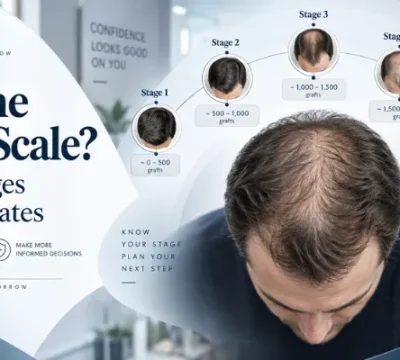
The Norwood Scale is commonly used to describe stages of male pattern hair loss, including early temple recession and later crown involvement. A slightly mature hairline does not automatically mean rapid baldness will follow, but continued change over months or years can help clarify the pattern.
Does the Crown Start Looking Thinner First?
For some people, crown thinning appears before major changes at the front. Because the crown is difficult to see in a mirror, the first clue may come from a photograph taken from above or a comment from a barber. Hair whorls naturally expose some scalp, so the key question is whether the visible area is becoming larger.
Wet hair and strong overhead lighting can exaggerate thinning. Photos taken from the same angle and in similar lighting give a more reliable comparison.
What Is Hair Miniaturisation?
Miniaturisation means that affected follicles gradually produce finer and shorter hairs. The area may still contain hair, but the strands provide less coverage. This process is commonly associated with androgenetic alopecia and can be present before a clearly bald area develops.
| Feature | Normal Variation | Possible Miniaturisation |
|---|---|---|
| Strand thickness | Mostly similar | Mix of thick and very fine hairs |
| Hair length | Reaches expected length | Some hairs remain shorter |
| Coverage | Relatively stable | Scalp becomes easier to see |
| Change over time | Little difference | Progressive density loss |
Miniaturisation can be difficult to judge at home. Magnified scalp examination may be more useful than counting shed hairs, especially when the main change is reduced thickness.
Is Increased Shedding the Same as Hair Thinning?
Not necessarily. Shedding describes hairs leaving the scalp, while thinning describes a reduction in visible density. A person can temporarily shed more hair after illness, fever, major stress, rapid weight loss, childbirth, or another trigger and later recover much of that density.
Some people with pattern hair loss do not report heavy shedding. They simply notice certain areas becoming less dense, making pattern and progression more useful than one isolated hair count.
How Can You Tell Hair Breakage From Hair Loss?
Hair breakage happens along the shaft, while shedding usually releases the full strand. Bleaching, heat styling, tight hairstyles, rough brushing, and chemical processing can make hair snap and create the impression that density is falling.
Broken hairs are often different lengths, while shed hairs are usually full-length strands. Both problems can occur together, so persistent changes deserve assessment when the cause is unclear.
How Do Early Signs Differ Between Men and Women?
Men more commonly develop temple recession, changes in the frontal hairline, and crown thinning. Women more often retain the frontal hairline while noticing diffuse thinning across the top or a widening central part.
| Common Pattern | Men | Women |
|---|---|---|
| Temple recession | Common | Less typical |
| Crown thinning | Common | Can occur |
| Widening central part | Possible | Common |
| Diffuse top thinning | Possible | Common |
| Smooth isolated patches | Not typical of early pattern loss | Not typical of early pattern loss |
These are general patterns, not diagnostic rules. Patchy loss, pain, redness, scaling, or rapid shedding can point toward other causes.
Can Stress or Diet Affect Hair Density?
Significant physical or emotional stress can disturb the hair cycle. Increased shedding may appear weeks or even months after severe illness, surgery, rapid weight loss, or prolonged stress. Because of this delay, people do not always connect the shedding with the original trigger.
Nutrition can matter too. Low protein intake, iron deficiency, or highly restrictive diets may contribute to shedding. If a deficiency is suspected, targeted testing and professional advice are more useful than guessing with supplements.
When Should You Get Hair Thinning Checked?
Professional assessment becomes more important when the pattern is sudden, unusual, progressive, or accompanied by scalp symptoms:
- Hair is coming out rapidly or in noticeable clumps.
- Smooth, clearly defined bald patches appear.
- The scalp is painful, red, itchy, scaly, or inflamed.
- Eyebrows, eyelashes, or other body hair are also thinning.
- The change follows a new medication or major medical event.
- Thinning continues to progress for several months.
- You are considering medication or a hair restoration procedure.
Early evaluation does not mean surgery will be recommended. Unstable hair loss may need observation or medical investigation first.
When Does a Hair Transplant Become Relevant?
A hair transplant may be considered when permanent hair loss has created an area that can be restored with suitable donor follicles. Cause, stability, donor density, age, and future progression all affect whether surgery makes sense.
People researching surgery can explore Asli Tarcan Global’s Hair Transplant in Turkey, DHI Hair Transplant, and FUE Hair Transplant pages. Transplantation restores density by relocating follicles; it does not replace investigation of unexplained hair loss.
Why Does Identifying the Cause Early Matter?
“Hair thinning” describes an appearance, not a diagnosis. Androgenetic alopecia, temporary shedding, alopecia areata, scalp inflammation, nutritional deficiency, thyroid disorders, and other conditions can produce different patterns. Choosing the right approach depends on understanding which process is actually present.
This matters when newer options attract attention. Research into clascoterone for hair loss, for example, focuses on androgenetic hair loss rather than every cause of shedding.
Can Early Hair Thinning Be Monitored at Home?
Yes, provided home monitoring does not replace professional assessment when warning signs are present. Take photographs every four to eight weeks using the same hairstyle, lighting, part position, and camera angle. Front, temple, top, and crown views can make gradual changes easier to compare.
Avoid checking several times a day. A consistent photo record over several months gives a clearer picture of whether thinning is stable, improving, or progressing.