Clascoterone could become a new option for male pattern hair loss, but its scalp formulation remains investigational. Positive late-stage trial results have brought it closer to a possible place in treatment. That matters for people watching their hairline change while wondering whether existing medicines suit them.
Still, a promising study and a prescription you can collect are different things. Understanding clascoterone for hair loss means looking beyond dramatic headlines. The useful questions concern how it works, who was studied, what improvement means, and what remains uncertain.
Table of Contents
What Is Clascoterone?
Clascoterone is a topical androgen receptor inhibitor. The ingredient already appears in Winlevi, a 1% prescription cream approved in the United States for acne. Hair loss research uses a different preparation: a 5% scalp solution associated with the development name Breezula.
The distinction matters when searching online. An acne cream containing the same ingredient does not become an established hair loss treatment. Concentration, formulation, application area, and supporting evidence all matter. Winlevi’s acne approval therefore does not establish the effectiveness or safety of the investigational scalp solution.
How Does Clascoterone Target Male Pattern Hair Loss?
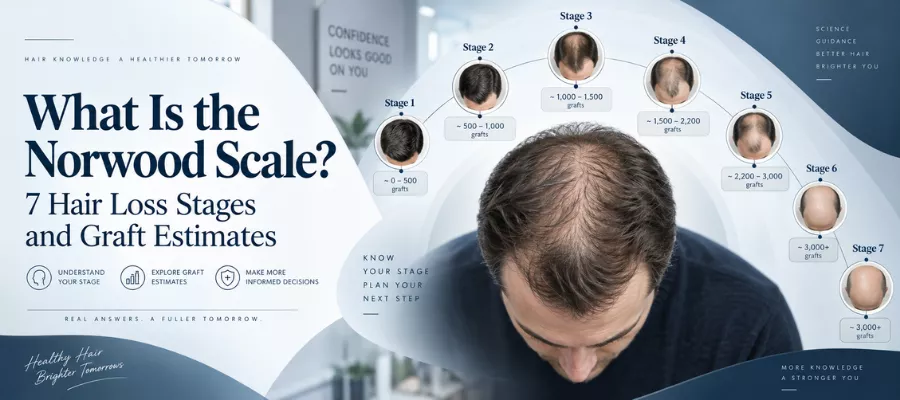
Male pattern hair loss involves genetic susceptibility and androgen activity. Dihydrotestosterone, usually called DHT, contributes to progressive changes in susceptible follicles. Over time, those follicles produce finer, shorter hairs. A crown that once looked dense gradually lets more scalp show through.
Clascoterone is designed to interfere with androgen signalling at receptors in the scalp. This differs from reducing DHT production throughout the body. The proposed benefit is a more local approach to an important driver of follicle miniaturisation. However, a targeted mechanism alone cannot tell us how much visible improvement an individual will experience.
What Have the Clinical Trials Shown?
Initial results from SCALP 1 and SCALP 2 became available in December 2025, involving 1,465 men altogether. Both trials reported statistically significant improvements in target-area hair count compared with vehicle. Vehicle means the preparation without the active drug. These initial topline findings require careful interpretation and assessment alongside the full clinical data.
Twelve-month results available in April 2026 indicated continued improvement among participants remaining on treatment. The extension enrolled responders from the initial six-month period. Its findings therefore describe a selected group, rather than everyone who originally started treatment.
| Research stage | Reported finding | What readers should remember |
|---|---|---|
| Six-month studies | Hair-count improvement versus vehicle | A measured area does not represent the whole scalp |
| Twelve-month extension | Continued benefit with ongoing treatment | Participants had already responded |
| Treatment withdrawal | Some gains declined after switching to vehicle | Continued use may be necessary |
Do Large Percentages Mean Dramatic Regrowth?
A large relative percentage does not mean someone grows several times their original amount of hair. Headlines may compare changes between treatment groups rather than total hair coverage. Without absolute numbers, the denominator, and photographs taken consistently, a percentage tells an incomplete story.
For patients, the practical question is simpler: would the difference be noticeable when styling their hair? Useful reporting should connect hair counts with appearance, satisfaction, and the proportion experiencing meaningful improvement. A statistically significant result deserves attention, but it does not promise a restored teenage hairline.
How Does Clascoterone Compare With Existing Treatments?
Clascoterone, finasteride, and minoxidil approach hair loss differently. Finasteride reduces DHT levels, while topical minoxidil supports hair growth without targeting androgen receptors. Established treatments also have practical limitations, including ongoing use and possible side effects. Their suitability depends on medical assessment and personal priorities.
| Option | Main approach | Key consideration |
|---|---|---|
| Clascoterone scalp solution | Targets androgen receptors locally | Investigational hair loss formulation |
| Oral finasteride | Reduces DHT production | Prescription treatment with potential adverse effects |
| Topical minoxidil | Promotes hair growth | Regular application is needed to maintain benefit |
These differences do not establish a winner. Separate trials cannot reliably show that one medicine outperforms another. That requires appropriate comparative research. A new option could be valuable even without replacing existing treatments, particularly if it meets needs that current choices leave unresolved. Daily routines matter, too. Before choosing any treatment, consider whether its application schedule fits your life. A medicine that sounds appealing on paper can become frustrating if using it consistently feels unrealistic. That practical conversation belongs alongside the discussion of clinical results.
What Are the Potential Side Effects?
Initial safety results indicated similar adverse events between the active treatment and vehicle groups in the pivotal trials. Those findings are encouraging. They do not establish that every user will tolerate treatment or that uncommon risks cannot emerge later.
The approved acne cream’s prescribing information includes irritation and warnings about adrenal-axis suppression. Elevated potassium was also observed during acne trials. These findings cannot be transferred directly to the 5% scalp solution, but they challenge the assumption that topical means risk-free. Safety needs to be assessed for the specific formulation and intended use.
Who Could Potentially Benefit From Clascoterone?
- Adult men with confirmed androgenetic alopecia are the population most directly relevant to the pivotal development programme.
- Men with mild-to-moderate thinning resemble the population described in the twelve-month extension more closely than those with advanced baldness.
- People interested in a topical approach may wish to follow developments, while recognising that future prescribing criteria remain unsettled.
- Women and people with other forms of alopecia should not assume that the male trial findings apply to them.
Why Does the Cause of Hair Loss Matter?
Clascoterone research does not provide a universal answer to shedding. Hair loss after illness, nutritional deficiency, thyroid problems, and autoimmune alopecia can involve different processes. Scarring conditions can permanently damage follicles. Treating every case as a DHT problem risks missing the actual diagnosis.
A consultation should explore when the change began, how quickly it progressed, and whether the scalp has symptoms. Examination may be enough to identify a pattern, while selected cases need further investigation. Bring a medication list and older photographs if available. They can give the discussion a clearer starting point than memory alone.
Is Clascoterone Approved for Hair Loss in 2026?
As of September 25, 2026, the hair loss solution remains investigational. US regulatory submission is planned for the first quarter of 2027. European submission is planned for the second quarter. These are anticipated application timelines, rather than confirmed approval or launch dates. Plans can change as the regulatory process moves forward.
| Milestone | Development status |
|---|---|
| Phase III programme | Completed, with positive topline findings |
| US application | Planned for Q1 2027 |
| European application | Planned for Q2 2027 |
| Routine prescription availability | No confirmed launch date |
Regulators must assess an application before deciding whether to authorise a medicine. Availability can also differ between countries. Anyone considering treatment should distinguish an official prescription product from an online listing using a familiar research name.
Could Clascoterone Replace a Hair Transplant?
There is no evidence that clascoterone can replace transplantation for every suitable patient. Medical treatment aims to influence existing follicles, whereas surgery relocates follicles into areas needing coverage. Someone exploring a hair transplant in Turkey should consider donor supply, the extent of thinning, and likely future progression.
Asli Tarcan Global’s guides to DHI hair transplantation and Sapphire hair transplantation explain surgical approaches. They offer useful background for a consultation, although technique names alone cannot establish suitability. The more useful discussion concerns realistic coverage, donor preservation, and a plan for managing continuing loss.
What Should You Discuss With a Specialist Now?
- Ask whether your hair loss pattern has been confirmed and whether another condition could be contributing.
- Review treatments available today, including their expected benefits, practical demands, and potential side effects.
- Clarify whether your priority is preserving density, improving coverage, or addressing a particular area of concern.
- Agree on photographs and review appointments that make progress easier to assess consistently.
- Ask how future clascoterone approval, if granted, might change your plan without stopping current prescribed treatment independently.
Frequently Asked Questions
Can I Use Winlevi on My Scalp Instead?
Winlevi is approved for acne, and its 1% cream differs from the investigational hair loss solution. Using it on the scalp is not an evidence-based substitute for the studied formulation. Discuss any proposed off-label treatment with a qualified prescriber.
Will Results Last After Treatment Stops?
The extension findings suggest that continued treatment matters. Participants switched to vehicle lost some gains. That argues against viewing clascoterone as a short course offering permanent regrowth, although individual outcomes and future prescribing guidance remain to be established.
Should I Wait Before Seeking Help?
You can follow the research while having your hair loss assessed now. Waiting for an uncertain launch date does not clarify your diagnosis. You can contact Asli Tarcan Global to discuss an assessment and current restoration options. A useful plan begins with your present needs and can be reconsidered as credible new evidence emerges.