A missing tooth can affect far more than a photograph. It may change how you chew, make you avoid certain foods, alter the way you speak, or leave you feeling self-conscious when you smile. Dental implants offer a long-term way to replace missing teeth with restorations designed to look, feel, and function much like natural teeth.
For international patients, choosing implant treatment also involves practical decisions: whether you are a suitable candidate, how many visits you may need, and how to organize care abroad without feeling rushed or unsupported. With the right clinical plan and coordinated travel support, restoring your smile can become a positive, well-managed step toward greater comfort and confidence.
Table of Contents
What Are Dental Implants?
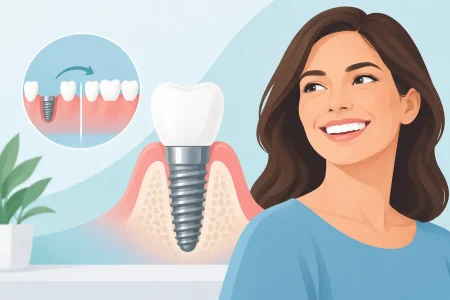
A dental implant is a small, biocompatible post placed in the jawbone to serve as the foundation for a replacement tooth. Once the implant integrates with the bone, it can support a custom crown, bridge, or a full-arch restoration. The visible tooth is made to match the shape, shade, and proportions of your smile.
Unlike a removable denture, an implant is fixed in place. Unlike a conventional bridge, it may allow the dentist to replace a missing tooth without reshaping the healthy teeth beside the gap. That distinction matters for patients who want a stable result that supports both function and appearance.
Implants can be used in several situations. One missing tooth may be replaced with a single implant and crown. Several missing teeth can sometimes be restored with an implant-supported bridge. For patients who have lost most or all of their teeth, a carefully planned full-mouth solution can provide fixed teeth supported by a strategic number of implants.
Why Patients Choose Dental Implants
The central benefit is stability. When an implant has healed properly and is restored with a well-designed crown or bridge, it can help you bite and chew more confidently. It can also prevent the shifting that sometimes occurs when a gap is left untreated.
There is an important bone-health consideration as well. After a tooth is lost, the jawbone in that area can gradually lose volume because it no longer receives the same stimulation from chewing. An implant transfers chewing forces to the jawbone, helping preserve the area over time. It does not stop every natural change in the face or mouth, but it can play a meaningful role in maintaining oral structure.
The cosmetic impact is equally personal. A natural-looking restoration can fill a visible space, support the contour of the smile, and help you stop thinking about hiding your teeth. For many people, that everyday ease is the outcome they value most.
Is an Implant the Right Choice for You?
Dental implants are highly versatile, but they are not a one-size-fits-all answer. A consultation and diagnostic assessment are essential before making a treatment decision. Your dental team will evaluate the condition of your gums, remaining teeth, bite, jawbone, and overall oral health. Detailed imaging helps determine where implants can be placed safely and predictably.
Good candidates generally have healthy gums, adequate bone or the possibility of bone grafting, and a commitment to daily oral hygiene. Health conditions such as uncontrolled diabetes, certain immune disorders, or medications that affect bone healing may require additional planning. Smoking can also increase healing and implant-related risks, so your dentist may recommend reducing or stopping tobacco use before treatment.
If there is not enough bone in the planned area, a grafting procedure or sinus lift may be advised. This can lengthen the treatment timeline, but it may create a more secure foundation for the implant. In some cases, alternative placement techniques or a different restoration may be more appropriate. Honest planning is always better than promising a shortcut that does not fit your anatomy.
Implant treatment is not always immediate
Some patients can receive a temporary tooth on the same day as implant placement, particularly in visible areas or full-arch cases. However, an immediate temporary restoration is not the same as receiving a final permanent tooth immediately. Your treatment team will decide whether immediate loading is safe based on implant stability, bone quality, bite forces, and the complexity of your case.
For others, the best approach is to allow a healing period before placing the final crown or bridge. This requires patience, but it gives the implant time to integrate with the jawbone and can support a more predictable result.
The Dental Implant Journey Step by Step
Your journey should begin well before your flight. During an online consultation, you can share dental X-rays, photos, medical history, and your goals. These details allow the team to provide an initial assessment and explain what may be involved. A final plan can only be confirmed after an in-person examination and imaging, but early communication helps you travel with realistic expectations.
Once you arrive in Turkey, the clinical team performs a detailed evaluation. This may include panoramic imaging or 3D scans, bite analysis, and an assessment of gum health. If treatment is suitable, the dentist will explain the implant position, the restoration plan, and the expected healing process before moving forward.
During implant placement, the area is numbed with local anesthesia. Depending on your needs and the clinic’s recommendation, sedation options may also be discussed. The implant is placed in the jawbone, and the gum tissue is closed or shaped around a healing component. Many patients describe the first few days as manageable with prescribed medication, rest, and soft foods.
After the placement phase, the implant needs time to heal. The length of this period varies. Some cases can move forward more quickly, while others need several months before the final restoration is fitted. If you are traveling from the United States, this may mean planning two visits to Turkey. The first visit focuses on diagnostics, surgical treatment, and early recovery; the later visit is for final crowns, bridges, or full-arch teeth after healing is confirmed.
This staged approach is not an inconvenience to hide. It is often a sign that the treatment is being planned around biology rather than a fixed holiday schedule.
Planning Dental Implants in Turkey
Traveling for dental care should not mean handling every detail alone. A well-organized medical travel provider can coordinate your consultation, treatment schedule, accommodation, airport transfers, and communication with the care team. This allows you to focus on your recovery rather than trying to navigate an unfamiliar city between appointments.
At Aslı Tarcan Global, the aim is to make the process feel personal from the first assessment through post-treatment follow-up. Your plan should account for the type of implant restoration you need, the time required in Istanbul, and whether a return visit is necessary. Clear communication is particularly valuable when treatment involves multiple phases.
It is wise to build flexibility into your travel plans. Avoid booking a flight home immediately after a surgical procedure, especially if your case is extensive. Give yourself time for follow-up checks and for any adjustments your dentist may recommend. You should also receive guidance on medications, eating, brushing, and what symptoms warrant contacting the clinical team.
Recovery and Long-Term Care
Initial swelling, tenderness, and minor bruising are common after implant surgery. These symptoms often improve over the first several days. Follow the instructions provided by your dentist carefully, including advice about pain medication, cold compresses, mouth rinses, and soft foods.
During early healing, avoid chewing hard foods directly on the treatment area. Keep the mouth clean as instructed, but be gentle around surgical sites. If you experience persistent bleeding, worsening swelling, fever, severe pain, or a loose temporary tooth, contact your dental team promptly.
Long-term implant care is straightforward but essential. Brush twice daily, clean between teeth or around the implant restoration with the products recommended for you, and attend regular dental checkups. Implants cannot develop cavities, but the gums and bone around them still need protection. Inflammation around an implant can lead to serious complications if ignored.
A beautifully restored smile is built on more than the procedure itself. It depends on precise planning, healthy healing, skilled restorative work, and the daily care you give it afterward.
If you are considering dental implants, begin with a professional assessment rather than a guess based on photos or prices alone. The right plan can help you return home not only with renewed teeth, but with the comfort to eat, speak, laugh, and enjoy life more freely.