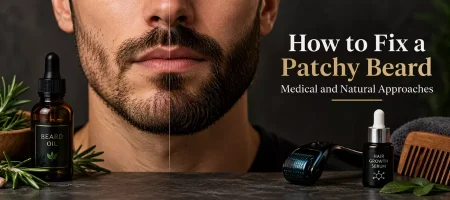
A patchy beard can improve with better grooming, time, or medical treatment, but the right approach depends on its cause. Some men have always had thin cheeks. Others notice a bald circle almost overnight. Those situations look similar but require different solutions. If you’re wondering how to fix a patchy beard, first establish whether you’re seeing natural hair distribution or actual hair loss.
A different trim may be enough for one person, while another needs dermatological treatment. Stable, naturally sparse areas may also be suitable for surgical restoration. Here’s how to tell realistic options from empty promises, without spending a fortune on products you may never need.
Table of Contents
Why Does a Beard Grow in Patches?
Facial hair follicles don’t develop evenly. Genetics largely determines their distribution and response to androgens, the hormones involved in beard development. Age matters too. A thin beard at 19 may become denser through the twenties. Sparse growth alone doesn’t prove low testosterone.
Distinguish between hair that never grew and hair that suddenly disappeared. Sharply defined bald patches may indicate alopecia barbae, a form of alopecia areata. Redness, scaling, or broken hairs might indicate inflammation or infection instead. The distinction matters because treatment differs. A photograph from six months ago can sometimes be more useful than a bathroom-mirror inspection. It helps establish whether the pattern was always there or has genuinely changed.
| Beard pattern | Possible explanation | Sensible next step |
|---|---|---|
| Thin cheeks since adolescence | Genetics or ongoing maturation | Allow growth time and choose a suitable style |
| New, smooth circular bald spot | Possible alopecia barbae | Arrange a dermatology assessment |
| Patch with redness or pustules | Possible folliculitis or fungal infection | Seek medical evaluation before applying growth products |
| Gradual thinning with other symptoms | Possible medical or nutritional factor | Discuss history and appropriate testing with a clinician |
How to Fix a Patchy Beard Naturally
Let your beard grow long enough to reveal its pattern. Short stubble exaggerates gaps, while longer neighboring hairs may overlap thin areas. Keep the neckline tidy and avoid trimming the cheek line too high. This guide to patchy beard growth and uneven beard styles explores other styling options.
Gentle care matters more than expensive products. Cleanse without scrubbing and moisturize beneath the hairs. Beard oil softens existing hair but cannot create follicles; neither can castor oil or homemade mixtures. Better-conditioned hair is useful, but it isn’t the same as increased density. Fragrance-heavy oils may cause irritation, which can make your beard look worse rather than better. Keep your routine simple enough that you’ll actually stick with it.
What Daily Habits Can Support Healthier Beard Growth?
Consistent habits support normal hair health, particularly after poor sleep, restrictive dieting, or skin irritation. They won’t override genetics or treat sudden hair loss. In particular, avoid assuming that a stressful month is the explanation for a sharply defined bald patch. Stress can affect health, but an immune-related condition or infection still needs proper assessment.
- Eat enough protein and include varied sources of iron, zinc, and other essential nutrients rather than relying on beard-growth supplements.
- Protect your sleep schedule and make room for regular activity; managing stress supports general health, although it does not guarantee regrowth.
- Use a mild cleanser and non-irritating moisturizer, especially if shaving leaves your cheeks dry or inflamed.
- Trim with clean tools, follow the direction of hair growth when shaving, and avoid repeatedly irritating the same areas.
- Photograph your beard under similar lighting once a month so you can judge changes more reliably.
Can Diet or Vitamins Fill Beard Gaps?
Nutrition helps maintain healthy hair, but supplements generally help only when a deficiency exists. Too little protein or iron can contribute to hair changes. High-dose biotin or zinc won’t reliably fill genetically bare cheeks, and excessive supplements can be harmful.
If thinning follows rapid weight loss or comes with other symptoms, ask a clinician whether testing makes sense. No single ‘beard vitamin’ treats every cause of sparse facial hair.
Medical Treatments for a Patchy Beard
For genuine hair loss, treatment must target the cause. Dermatologists sometimes use corticosteroid injections or prescription topical medicines for localized alopecia areata. Patches can regrow spontaneously or recur. Fungal infections require different treatment. The examination matters more than the size of the gap. For example, a fungal infection of the beard may cause inflamed bumps, broken hairs, and crusting. It can require prescription oral antifungal treatment, so applying oils or steroid creams without a diagnosis can be the wrong move.
Minoxidil is frequently promoted for beards. Limited evidence suggests benefits for some people, but facial application is off-label in the United States. Irritation and unwanted hair growth are possible, and exposure can seriously harm pets. Ask a dermatologist before using it or starting prescription treatments. Minoxidil should never be treated like a harmless skincare serum; safe handling matters, particularly in households with cats or dogs.
| Medical option | When it may be considered | Important limitation |
|---|---|---|
| Corticosteroid injections | Selected cases of localized alopecia barbae | Requires professional diagnosis; regrowth isn’t guaranteed |
| Prescription topical treatment | Certain inflammatory or autoimmune causes | Choice and duration depend on the condition |
| Minoxidil | Selected cases after medical advice | Off-label for beards; may irritate skin |
| Antifungal medication | Confirmed fungal beard infection | Will not correct genetic thinness |
| Beard transplantation | Stable gaps with suitable donor hair | Surgery carries risks and won’t treat active disease |
Alopecia Barbae and Sudden Beard Hair Loss
Alopecia barbae may appear suddenly as a smooth, circular patch. The immune system attacks hair follicles, but the condition isn’t contagious. Follicles may recover spontaneously, although new patches or relapses can occur.
Sudden bald spots in a previously full beard warrant assessment. A dermatologist can examine the skin and investigate other conditions when necessary. This is particularly important if the patches are spreading.
Could a Beard Transplant Fix Permanent Gaps?
For stable, long-standing gaps, a beard transplant in Turkey may be an option. Follicles are generally moved from the scalp into selected facial areas. Hair direction and angle must blend with existing growth. Donor supply, skin condition, scars, and expectations all affect suitability. A transplant can fill selected areas, but it cannot change the genetics of the rest of your beard. The aim is a believable shape and distribution, not necessarily maximum density everywhere.
FUE hair transplantation can extract individual follicular units, but no technique guarantees a natural result. Surgery shouldn’t be the first response to active, unexplained hair loss. Discuss coverage, risks, recovery, and eligibility with a qualified clinician.
How Long Does It Take to See a Fuller Beard?
Timeframes differ. Longer existing hairs may improve coverage within weeks; medical regrowth often takes months. Transplanted hairs commonly shed before growing again, with maturation taking longer. Instant transformations are unrealistic. If you’re monitoring progress, compare photographs taken in the same light and at the same beard length. Consistent photos make small changes easier to judge.
| Approach | When changes might become noticeable | What to expect |
|---|---|---|
| Strategic trimming and growth | Several weeks | Better coverage, not new follicles |
| Skin care and nutrition | Variable | Healthier conditions, not guaranteed density |
| Treatment for alopecia barbae | Often months | Regrowth varies and relapse is possible |
| Beard transplantation | Several months to a year | Gradual growth after an initial shedding phase |
When Should You See a Dermatologist?
Uneven cheeks alone aren’t a medical emergency. New or progressive changes deserve attention, though, because a dermatologist can distinguish naturally sparse growth from disease.
- A round, smooth bald patch appears suddenly or expands over several weeks.
- The skin becomes red, painful, scaly, crusted, or develops pus-filled bumps.
- Beard loss occurs alongside scalp, eyebrow, or eyelash hair loss.
- You notice fatigue, unexpected weight changes, or other symptoms alongside thinning.
- Previous treatments have irritated your face or the underlying cause remains unclear.
Frequently Asked Questions
Does Shaving Make a Patchy Beard Grow Thicker?
No. Shaving cuts hair at the surface without changing the number of follicles or the rate at which they produce hair. Freshly cut ends may feel coarse and look darker, creating the impression of thickness. That effect is temporary, not a change in beard growth.
Can a Patchy Beard Become Full With Age?
Yes, particularly if you’re still in your late teens or twenties. Facial hair can continue maturing for years. However, age alone cannot guarantee coverage in every area, and sudden loss after a previously stable beard should not be dismissed as normal development.
Is a Beard Transplant a Permanent Solution?
Transplanted follicles can provide long-lasting growth when they survive and heal successfully, but outcomes differ. Existing hair loss, donor characteristics, scarring, and aftercare all matter. To discuss whether surgery is suitable, you can contact Aslı Tarcan Global for an individual assessment.