A clear view of the Istanbul skyline the morning after treatment can feel like a brand-new beginning. But before planning your trip, the question is naturally practical: how long does LASIK last? The corneal reshaping created by LASIK is permanent, yet your eyesight can still change over the years because your eyes continue to age.
For many suitable patients, LASIK delivers long-lasting freedom from glasses or contact lenses. The goal is stable, clear distance vision that supports work, travel, exercise, and everyday confidence. Still, the most honest answer is not that LASIK lasts for one fixed number of years. Your long-term result depends on your prescription, eye health, age at treatment, and natural vision changes later in life.
Table of Contents
How Long Does LASIK Last for Most Patients?
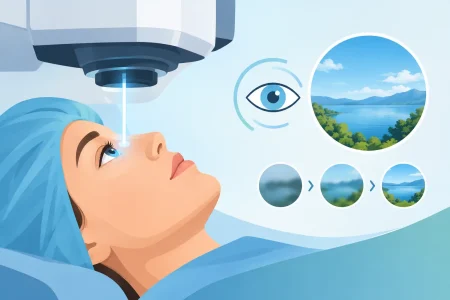
LASIK permanently changes the shape of the cornea, the clear front surface of the eye. During the procedure, a laser removes a microscopic amount of corneal tissue to improve how light focuses on the retina. That tissue does not grow back, so the correction itself is designed to last.
Many patients continue to enjoy excellent distance vision for decades. Some never need glasses again for distance activities. Others may experience a small shift in prescription over time and occasionally use glasses for night driving, detailed work, or certain situations. A smaller group may be candidates for an enhancement procedure if enough corneal tissue remains and their eye health supports it.
The key distinction is simple: LASIK does not wear off like a medication or a cosmetic treatment. However, it cannot stop age-related changes inside the eye. A thorough pre-treatment examination helps your ophthalmologist assess whether LASIK is the right procedure for your eyes and set realistic expectations for your future vision.
Why Vision Can Change After LASIK
Even with a successful procedure and stable early recovery, eyesight is influenced by more than the cornea. Your natural lens, retina, tear film, and overall health all play a role in how you see.
Presbyopia: the reading-glasses change
The most common reason people need glasses after LASIK is presbyopia. This is the normal age-related loss of near focusing ability, usually becoming noticeable in the 40s. It affects people whether they have had LASIK or not.
You may still see clearly across a room but find yourself holding a menu farther away or reaching for reading glasses. Patients over 40 can discuss options such as monovision LASIK, where one eye is adjusted more for distance and the other for near tasks. This approach is not ideal for everyone, which is why a contact lens trial is often useful before making a permanent correction.
Small prescription regression
A modest change in nearsightedness, farsightedness, or astigmatism can occur in some patients. This is sometimes called regression. It may happen because the eyes were not fully stable before surgery or because of the way an individual eye heals.
This does not automatically mean a second procedure is needed. If the change is minor, occasional glasses may be all that is required. When vision changes affect daily life, an eye specialist can evaluate whether an enhancement is safe and appropriate.
Cataracts and later-life eye changes
LASIK does not cause cataracts, but it also cannot prevent them. Cataracts develop in the eye’s natural lens and become more common with age. If cataracts affect your vision later, cataract surgery can usually be planned successfully, although it is essential to tell your surgeon that you previously had LASIK.
Keeping copies of your pre-LASIK measurements can be helpful for future eye care. Your treatment team should provide clear records and explain what information to retain after your procedure.
What Affects How Long LASIK Results Last?
The best long-term outcomes begin long before the laser treatment. A careful screening process is not a formality. It protects your eye health and helps match you with the procedure most likely to serve you well.
Several factors matter most:
- Stable prescription: Your glasses or contact lens prescription should generally be stable before surgery. Treating an actively changing prescription can increase the chance of later changes.
- Age and visual needs: A 25-year-old seeking distance freedom has different future needs from a 48-year-old who is already noticing near-vision changes.
- Corneal health and thickness: The cornea must be healthy and suitable for safe reshaping. Advanced mapping helps assess its shape and strength.
- Dry eye symptoms: LASIK can temporarily worsen dryness, and untreated dry eye can affect comfort and visual quality. Addressing it before treatment is part of responsible planning.
- General eye health: Conditions affecting the retina, optic nerve, cornea, or immune system may alter whether LASIK is advisable.
A trustworthy consultation does not promise that every patient will achieve perfect vision forever. It explains what the procedure can realistically accomplish, what it cannot prevent, and whether another option may suit your eyes better.
Can You Have LASIK Again?
Possibly, but only after a detailed assessment. An enhancement is not a routine repeat treatment or an automatic answer to any visual change. Your ophthalmologist will check your prescription stability, corneal thickness, corneal shape, tear quality, and overall eye health before recommending it.
Timing matters as well. Vision can fluctuate during the early healing period, so specialists typically wait until your eyesight has stabilized before considering any further correction. For patients whose later vision changes are caused by presbyopia or cataracts, an enhancement may not be the most suitable solution.
The safest mindset is to view LASIK as a lasting structural correction, not a lifetime guarantee against every change your eyes may experience.
Planning LASIK in Turkey With Confidence
For international patients, lasting results depend not only on the procedure itself but also on how well the entire journey is organized. A high-quality plan starts with a remote review of your prescription, medical history, and visual goals. Once you arrive, detailed in-person testing confirms whether LASIK remains the right choice.
Allow enough time in Turkey for pre-operative measurements, treatment, and early post-operative checks. LASIK recovery is often quick, but your eyes still need protection and monitoring. You may notice clearer vision within a short time, while sharpness and comfort continue settling over the following days or weeks.
After treatment, follow the prescribed eye-drop schedule exactly. Avoid rubbing your eyes, protect them from dust and water exposure as advised, and attend every scheduled check. If you are flying home soon after treatment, ask your care team about your travel timing, medication plan, and how to arrange follow-up with an eye doctor in your home country.
At Aslı Tarcan Global, the focus is on helping international patients move through these steps with personal guidance, from initial consultation and travel planning to treatment coordination and recovery follow-up. The right support can make overseas care feel far more manageable, especially when your vision is involved.
Questions to Ask Before You Book
Before choosing a clinic, ask who will perform your examination and procedure, which diagnostic tests are included, and whether you are a candidate for LASIK or a different refractive option. You should also understand what follow-up is provided while you are in Turkey, what records you will receive, and what to do if you have concerns after returning home.
Ask directly about expected results for your own prescription rather than relying on a general promise. If you are over 40, bring up reading vision and monovision. If you have dry eyes, contact lens discomfort, previous eye surgery, diabetes, or a family history of keratoconus, share that information early.
Clear answers are a sign of patient-centered care. Your treatment plan should feel individualized, never rushed.
LASIK can be a meaningful step toward easier mornings, more spontaneous travel, and a more confident daily routine. Give yourself the best chance of enjoying that freedom for years by choosing careful screening, experienced eye care, and a recovery plan that stays with you after the flight home.