A hair transplant is not judged when you leave the clinic. The most meaningful FUE patient results appear gradually, as transplanted follicles settle, shed, rest, and begin producing new hair. For international patients traveling to Turkey, understanding that timeline can replace uncertainty with realistic excitement and help you plan your return home, work schedule, and recovery with confidence.
FUE, or Follicular Unit Extraction, is a technique that removes individual follicular units from a donor area, usually the back and sides of the scalp, and places them into areas affected by thinning or hair loss. The goal is not simply to add density. It is to create a hairline, direction, and distribution that look natural for your facial features, age, and long-term pattern of hair loss.
Table of Contents
Why FUE Patient Results Take Time
Each transplanted graft needs time to establish a blood supply and enter its normal growth cycle. This is why the first days after treatment do not reveal the final outcome. You may see tiny grafts and short hairs at first, but visible new growth is still months away.
Most patients experience temporary shedding of the transplanted hairs within the first few weeks. This stage can feel discouraging if you were expecting immediate progress, but it is usually part of the process. The follicles remain under the skin, resting before new hair begins to grow.
Your final result also depends on more than the procedure itself. Donor hair quality, the extent of hair loss, scalp condition, graft survival, hair thickness, curl pattern, and careful aftercare all play a role. A patient with fine hair may need a different density strategy than someone with coarse, curly hair. This is why a personalized plan matters more than a one-size-fits-all graft number.
FUE Results Timeline: What to Expect Each Month
Days 1 to 10: Healing and graft protection
The first priority is protecting the grafts while the scalp heals. Mild swelling, redness, tenderness, and small scabs can occur in both the donor and recipient areas. Your clinic will provide washing instructions and guidance on sleeping position, medications, and activities to avoid.
During this stage, do not rub, scratch, or pick at the treated area. Avoid strenuous exercise, direct sun exposure, swimming, and anything that could cause friction or excessive sweating until your medical team clears you. Patients who follow aftercare instructions carefully give their healing scalp the best possible conditions.
Weeks 2 to 8: The shedding phase
Many transplanted hairs fall out during this period. This is often called shock shedding, and it can happen alongside temporary thinning of some existing hair near the transplant area. Seeing shedding after traveling home can be unsettling, especially when you have invested time and trust in your treatment journey.
It does not automatically mean the transplant has failed. In many cases, the follicle is still healthy beneath the skin. Staying in contact with your care team and sharing clear progress photos can provide reassurance and allow concerns to be assessed appropriately.
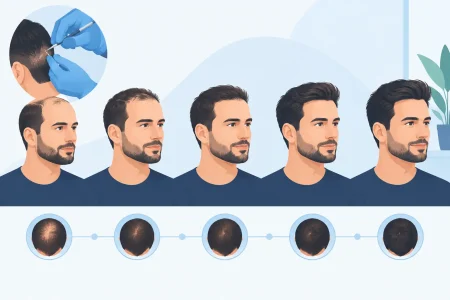
Months 3 to 4: Early signs of growth
New hairs may begin to emerge around the third or fourth month. At first, they can be thin, light in color, uneven, or slower-growing in certain areas. A new hairline may look soft rather than dense, and that is expected.
Early growth is a promising milestone, not the finished look. Hair grows in cycles, and neighboring follicles do not all begin producing hair on the same day. Patience remains essential during this stage.
Months 5 to 7: Noticeable change
This is when many patients begin to see a more visible improvement in coverage. The hair often becomes stronger and darker, while the transplanted area starts to blend more naturally with existing hair. Styling may become easier, and photos may show a difference that was not obvious month to month.
Results can vary significantly at this point. Some patients progress quickly, while others see steadier change over a longer period. Hairline work, crown restoration, and large treatment areas can each develop at different speeds.
Months 8 to 10: Greater density and refinement
By this stage, the transplant is usually making a clearer visual impact. More hairs have emerged, and the overall texture often appears fuller. The direction and placement of grafts become especially important now, because they influence how naturally the hair moves and how easily it can be styled.
For patients with a crown transplant, the result may still be developing. Crown areas can require more time because the natural growth pattern is circular and achieving convincing coverage may depend on available donor supply and the size of the area being treated.
Months 12 to 18: Mature FUE patient results
Most patients see their mature outcome at around 12 months, although full refinement can continue up to 18 months, particularly in the crown area or for people with slower growth cycles. The new hair can be cut, styled, and treated like the rest of your hair once your medical team confirms normal healing.
A natural result should fit you rather than look artificially low, straight, or dense in one isolated area. An experienced team plans the hairline with future hair loss in mind, protecting donor resources and creating an appearance that can age well.
What Makes a Natural-Looking Outcome
A successful FUE transplant is a balance of artistry, medical planning, and realistic expectations. The number of grafts matters, but it is not the only measure of quality. A very high graft count is not always appropriate if your donor area cannot support it safely or if your long-term hair loss requires a more conservative approach.
Hairline design should consider facial proportions, ethnicity, age, and the way you normally wear your hair. Grafts with one hair are often placed at the front to create softness, while multi-hair grafts can contribute to density behind the hairline. Angles must follow the natural direction of growth. These details are what help the result look like your own hair rather than a visible procedure.
Patients should also understand that FUE does not stop ongoing genetic hair loss in non-transplanted areas. Depending on your medical history and goals, your specialist may discuss ways to preserve existing hair. This is particularly relevant for younger patients or those with progressive thinning.
Planning Your FUE Journey From the US to Turkey
Traveling for hair restoration should feel organized, not overwhelming. Before treatment, a detailed online consultation can review your photos, hair loss pattern, donor area, health history, and expectations. It also gives you the opportunity to ask practical questions about the procedure, accommodation, airport transfers, local support, and the time you should remain in Turkey.
Aslı Tarcan Global coordinates the treatment journey beyond the clinic visit, helping international patients move from consultation to travel planning, treatment, recovery guidance, and follow-up. This level of support matters because early aftercare begins before you board your flight home.
When reviewing any proposed plan, ask how the graft estimate was determined, who will perform each stage of the procedure, what aftercare is included, and how follow-up will work once you return to the US. Clear answers are a sign of thoughtful care. Be cautious of guarantees that promise an identical result for every patient or claim instant density.
How to Support Your Recovery and Results
Your part in the process is straightforward but meaningful. Follow your prescribed washing routine, avoid smoking if advised, protect your scalp from sun and trauma, and attend or participate in scheduled follow-ups. Share photos at the intervals requested by your clinic so your progress can be monitored from abroad.
Maintain a healthy routine, but do not introduce supplements, topical products, or intense scalp treatments without checking first. Even well-intentioned changes can irritate a healing scalp or conflict with your aftercare plan. If you notice significant pain, spreading redness, discharge, fever, or any symptom that concerns you, contact your medical team promptly.
The best FUE patient results are built patiently: through a plan that respects your donor supply, skilled placement that honors your natural appearance, and attentive support through every stage of regrowth. When you choose care with those priorities, the months ahead become more than a waiting period. They become the beginning of a renewed, more confident relationship with your reflection.