A brighter, more balanced smile can change how you show up in photographs, meetings, and everyday conversations. But before choosing a smile makeover, many patients ask, are dental veneers permanent? The honest answer is nuanced: veneers themselves do not last forever, but traditional veneer treatment usually creates a lifelong commitment because a small amount of tooth enamel is often reshaped.
That does not mean veneers are a poor choice. It means they should be planned with the same care as any meaningful investment in your health, appearance, and confidence. When treatment is designed around your facial features, bite, goals, and long-term oral health, veneers can deliver a natural-looking smile for many years.
Table of Contents
Are Dental Veneers Permanent?
Traditional dental veneers are generally considered irreversible. To create enough room for a porcelain veneer to sit naturally against the gumline and align with neighboring teeth, the dentist commonly removes a thin layer of enamel from the front surface of the tooth. Enamel does not grow back.
Once a tooth has been prepared, it will usually need to remain protected with a veneer or another restoration, such as a crown, for the rest of your life. This is what people usually mean when they say veneers are permanent.
However, the veneer material is not permanent. Porcelain veneers often last 10 to 15 years and may last longer with excellent care. Composite resin veneers usually have a shorter lifespan, often around 5 to 7 years, although this varies with the material, your bite, and daily habits. At some point, a veneer may need replacement because of wear, chipping, leakage around the edges, gum changes, or cosmetic preferences.
A replacement is not always a dramatic procedure, but it does require ongoing dental care. Choosing veneers is therefore less about finding a once-in-a-lifetime product and more about choosing a long-term smile plan.
Why Tooth Preparation Matters
Your natural enamel is remarkably strong. A skilled dentist aims to preserve as much of it as possible while still creating a stable, beautiful result. The amount removed depends on the existing tooth position, color, shape, and the desired change.
For example, teeth that are slightly small, worn, uneven, or spaced apart may need very little preparation. Teeth that are prominent, severely discolored, rotated, or crowded may need more adjustment to avoid a bulky appearance. A veneer should enhance your smile, not look thick or feel unnatural when you speak and bite.
Some patients hear about “no-prep” veneers and assume they are fully reversible. In reality, no-prep or minimal-prep options are suitable only for select cases. Even when no enamel is removed, the tooth surface may still be conditioned to help bonding, and removing or replacing the restoration later can require careful clinical work. Your dentist should explain exactly what is planned for your teeth rather than making a broad promise about reversibility.
Veneers, Crowns, and Bonding Are Not the Same
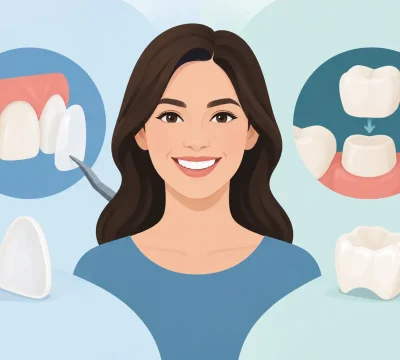
Veneers cover the visible front surface of a tooth and are primarily used to improve color, symmetry, minor gaps, chips, and shape. They work best when the underlying teeth and gums are healthy.
Crowns cover the entire tooth. They may be the better choice when a tooth has a large filling, substantial decay, a crack, root canal treatment, or extensive structural damage. Preparing a tooth for a crown generally involves more reduction than preparing it for a veneer, but a crown can provide the support a weakened tooth needs.
Composite bonding adds tooth-colored resin directly to the tooth. It can be a more conservative option for small chips, minor spacing, and subtle reshaping. It is often easier to repair than porcelain, but it can stain and wear sooner. For patients who want to test a modest cosmetic change before committing to veneers, bonding may be worth discussing.
The right treatment is not necessarily the whitest or most dramatic one. It is the option that protects your oral health while supporting the smile you want to live with for years.
How Long Can Veneers Last?
Longevity depends on more than the type of material. High-quality planning, accurate bite adjustment, careful bonding, and good oral hygiene all influence how a veneer performs over time. Porcelain is highly stain-resistant and can maintain its color beautifully, while composite can be polished and repaired more easily but may need more frequent maintenance.
Your habits matter, too. Biting fingernails, opening packages with your teeth, chewing ice, and regularly eating very hard foods can chip or crack a veneer. Teeth grinding and jaw clenching place especially strong pressure on restorations. If you grind at night, a custom night guard may be recommended to protect both your veneers and your natural teeth.
Gum health also matters. Veneers do not cause cavities, but the natural tooth beneath and around them can still develop decay if plaque builds up near the margins. Brushing twice daily with a nonabrasive toothpaste, flossing carefully, and attending regular checkups protect the investment you have made in your smile.
A Beautiful Result Starts With the Right Plan
A confident veneer decision begins before any tooth preparation. During a proper consultation, the dental team should assess your teeth, gums, bite, existing restorations, and expectations. Photos, digital scans, and X-rays may be used to create a treatment plan that feels personal rather than standardized.
Talk openly about the shade and shape you want. Some patients prefer a bright Hollywood-style smile, while others want a softer, natural shade that suits their complexion and age. The most successful smile designs respect facial proportions, lip movement, and the way your teeth show when you speak.
It is also wise to discuss whether you need treatment for gum inflammation, decay, bite problems, or missing teeth before veneers. Cosmetic dentistry should not cover an untreated problem. A healthy foundation helps create a result that looks good and feels comfortable.
Questions Worth Asking Before Treatment
Ask how much enamel, if any, is expected to be removed, whether porcelain or composite is recommended, and why that material suits your case. You should also understand the expected lifespan, what replacement may involve, and how any grinding or bite concerns will be managed.
If you are traveling for dental care, ask about the number of visits required, the treatment timeline, temporary veneers if needed, and the plan for follow-up once you return home. Clear answers are a sign of responsible, patient-centered care.
Planning Veneers in Turkey as an International Patient
For many US patients, Turkey offers access to comprehensive dental care at a more accessible cost. Still, value should never mean rushing into a decision. Veneers require clinical precision and time for design, preparation, laboratory work, fitting, and bite checks.
A coordinated treatment journey can make the experience feel far more manageable. At Aslı Tarcan Global, international patients can begin with a free online consultation, share their smile goals and dental information, and receive guidance on an individualized treatment and travel plan. This helps you understand the likely schedule before arranging flights and accommodations.
Most veneer treatments involve several appointments over a number of days. The dentist prepares the teeth where appropriate, takes impressions or digital scans, and may place temporary restorations while the final veneers are produced. At the fitting appointment, each veneer is assessed for shade, contour, fit, and bite before bonding. This final stage should never feel hurried, because tiny adjustments can make a significant difference in comfort and appearance.
After treatment, give yourself time to settle in before returning to normal routines. You may notice mild sensitivity after preparation or need a short adjustment period as your bite adapts. Keep all aftercare instructions, protect your teeth from unnecessary force, and arrange regular checkups with your local dentist after you return home.
When Veneers May Not Be the Best First Step
Veneers are not automatically the answer for every smile concern. If your main goal is a whiter smile and your teeth are otherwise well-shaped, professional whitening may be enough. If you have crowding, a crossbite, or a significant alignment issue, orthodontic treatment may protect your teeth better than covering the problem cosmetically.
Patients with active gum disease, untreated tooth decay, severe grinding without protection, or unrealistic expectations should address those concerns first. A caring dental team will sometimes recommend waiting, treating another issue, or choosing a more conservative option. That is not a setback. It is how your long-term smile is protected.
Veneers can be a wonderful fresh chapter when they are chosen for the right reasons and planned with clarity. Give yourself permission to ask detailed questions, compare appropriate options, and choose a team that sees your treatment as an ongoing commitment to your confidence and oral health, not just a single appointment.